scoring · coaching · data
Coefficient Movements — Where the Points Actually Live
Across 766,286 scored movements from 2023 onward, movements with a coefficient of 2 average 6.21 against 6.34 for everything else. They score slightly lower, and the sheet names them in advance.
Every test shows where its weight sits before it is ridden. The coefficient column on the sheet marks the movements with a coefficient of 2.
In our records, those movements also score slightly lower than everything else, across all levels together.
The basic gap
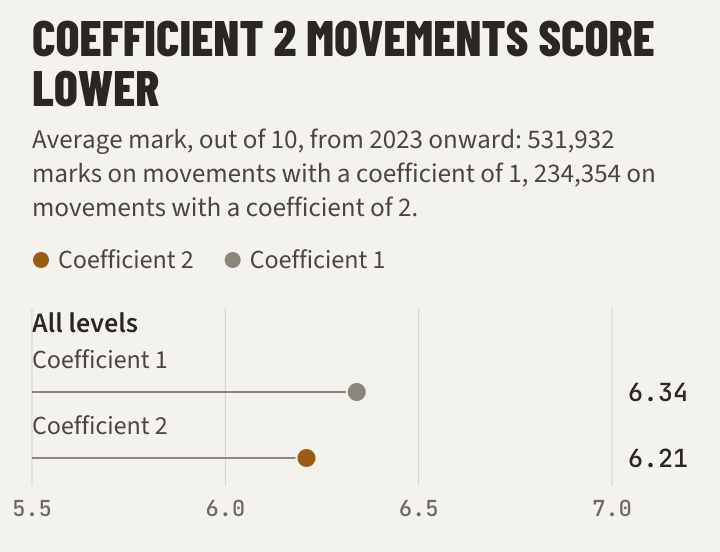
A gap of about an eighth of a mark sounds like nothing. Work it through a test and it stops being nothing. Six movements with a coefficient of 2 carry the weight of twelve, so if each lands that much lower, a test marked out of 370 loses about 0.4 of a percentage point from its final score, and a shorter test loses more.
That gap puts every level together, and it differs from level to level.
Which movements, specifically
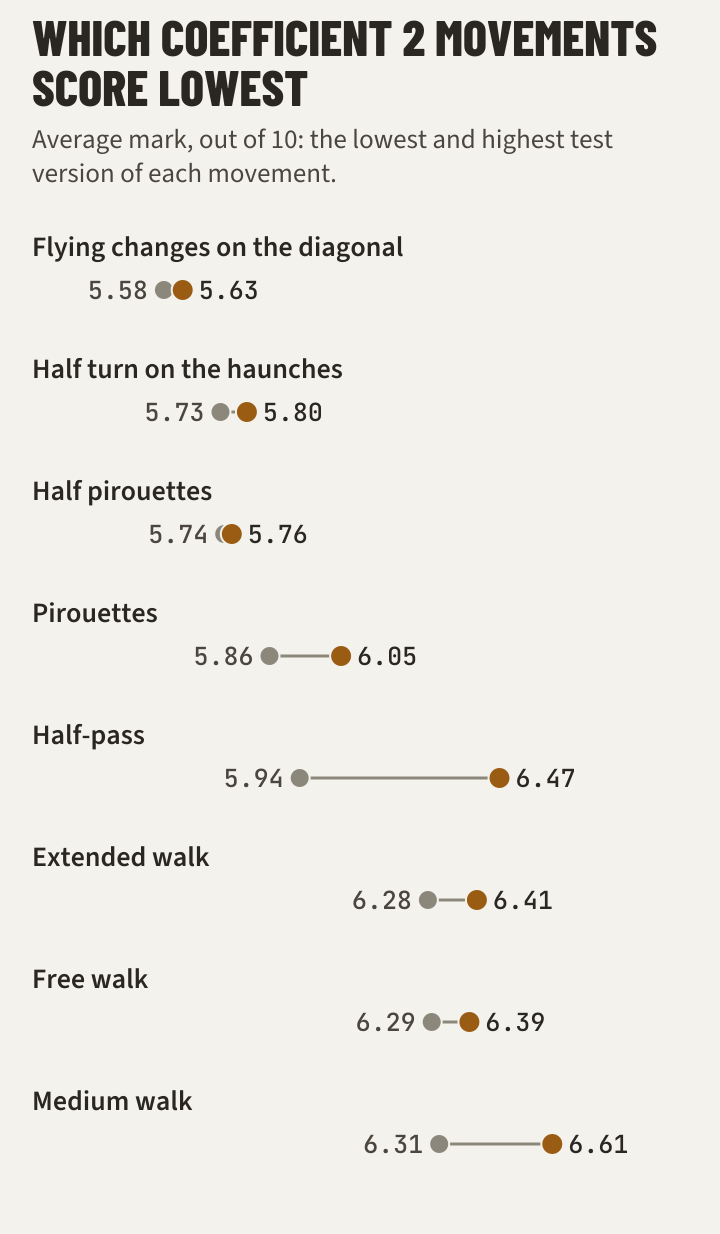
The spread from the bottom of that list to the top is a full mark. With a coefficient of 2, that full mark weighs as much as two.
The changes score lowest. Flying changes on the diagonal are among the lowest-scoring often-ridden coefficient movements in our records, at around 5.6.
The walk sits at the top. The three highest-scoring movements with a coefficient of 2 in our records are all walks, at 6.5 and above. Other walk movements sit lower, from about 6.3.
Source: DPI’s results database.